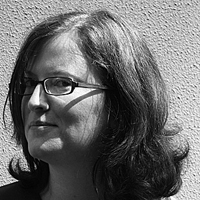
I'm a writer, historian, archivist, mother, knitter, raveler, researcher, philatelist, sometime Francophile, family historian (jam first) and snapperup of unconsidered trifles. Wrote Blue Mauritius: The Hunt for the World's Most Valuable Stamps. Still love stamps and still love Mauritius.
I am interested in the gaps, speculation and the sometimes less rosey side of what we discover through family history. I love the capacity family history has to make us more empathetic and help us better understand ourselves. I’ve always loved biography (of people and things) and the challenge of constructing stories from seemingly little (or much worked over) evidence.
Whether it's my own or yours, I love family history. Contact me to find out how I can help you uncover your family stories and more.
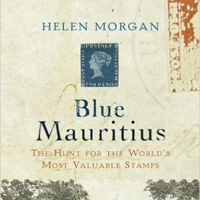
I was intrigued by the story of the French schoolboy and the Bordeaux letter and imagined his delight after reading of the stamps' rarity and value, astutely searching through the archived correspondence of the French wine importing firm and discovering the 'Post Office' stamps.
“The extraordinary story of the world's most sought-after postage stamps makes fascinating reading in the hands of art historian Helen Morgan, who has turned what so easily could have been a highly-specialised treatise on the birth of philately into an intriguing slice of social history.”
Yorkshire Post
The story had all the elements which appealed to me as a researcher, archivist and writer: the visual appeal of the stamps; their production and the early history of the postal service and communication in Mauritius; the philatelic detective work required to unravel their status as the first issue of Mauritius during the 1860s; philatelic research as a science; the provenance of the known examples and the history of collecting, both 'big game' and 'small'; those who have owned, lusted after and studied the stamps; the concepts of rarity, intrinsic value, true worth and fame; the role that accident, chance and determined hunting have played in the discovery of the known examples; the apocryphal stories surrounding the stamps, and their appearance in fiction from at least 1896 onwards, including the likes of Billy Bunter and the Blue Mauritius in the 1950s and an episode of The Avengers.
“Not just an entertaining and meticulously researched history of Mauritius and its stamps, but also an absorbing look at the early development of one of the world's most widespread hobbies.”
Sunday Business Post (Ireland)
The Research Companion website for my book brings together subject entries from the narrative, including a biography for each of the twenty-seven stamps, with bibliographical citations and related images. The navigational key to the website, and its utility, lies in the relationships between subjects and resources.
Helen Morgan, Blue Mauritius: The Hunt for the World's Most Valuable Stamps, Atlantic Books, London, 2006. Launch Speech | Reviews
Helen Morgan, 'Foreword', Mauritius Post Office: The Printing Plate, David Feldman, 1 December 2016, pp.10-13. Download catalogue
Helen Morgan, 'Foreword', Mauritius Post Office: The Bombay Cover, David Feldman, 1 December 2016, pp.10-15. Download catalogue
Helen Morgan, Dearest, are you in Melbourne? published continuously since 2020.
Helen Morgan, 'The Blewetts of Penzance, builders, and their disastrous encounter with 'Marvellous Melbourne', 1850s to 1870s: Filling in the gaps', presentation to the Cornish Association of Victoria, 21 August 2021. Watch on YouTube
Who Do You Think You Are?, season 11, episode 2 - Bert Newton, SBS, aired 26 May 2020, 7.30pm
Presenter: Helen Morgan, Interviewee: Mary Sheehan, In Sickness and in Health #1: Spanish Flu, My Marvellous Melbourne, Melbourne History Workshop, episode 7, 26 July 2019.
Presenter: Helen Morgan, Interviewee: Frank Hullin, Melbourne A to Z #2: Wattle Park, My Marvellous Melbourne, Melbourne History Workshop, episode 6, 15 October 2018.
Presenter: Helen Morgan, Interviewee: Amber Evangelista, On the Beat #3: Women in Policing, My Marvellous Melbourne, Melbourne History Workshop, episode 5, 7 August 2018.
Presenter: Helen Morgan, Interviewee: Nikki Henningham, On the Beat #1: Ivy Cogdon, My Marvellous Melbourne, Melbourne History Workshop, episode 3, 31 January 2018.
Presenter: Helen Morgan, Interviewee: Stella Marr, Archive Fever #1: Australian Red Cross Archives, My Marvellous Melbourne, Melbourne History Workshop, episode 2, 13 December 2017.
Helen Morgan, Cate O'Neill, Nikki Henningham, Gavan McCarthy and Annelie De Villiers, 'Value in fragments: An Australian perspective on re-contextualisation', Do Archives Have Value?, M. Moss and D. Thomas (eds), Facet Publishing, London, 2019, pp.37-61.
Nikki Henningham, Joanne Evans, Helen Morgan, 'The Australian Women's Archives Project: Creating and co-curating community feminist archives in a post-custodial age', Archives and New Modes of Feminist Research, Routledge, 2018. Winner, Category 1B, 2018 Mander Jones Award, Australian Society of Archivists. Citation.
Gavan McCarthy and Helen Morgan, 'Rights and the commons: navigating the boundary between public and private knowledge spaces', Is Digital Different? How information creation, capture, preservation and discovery are being transformed, M. Moss and B. Endicott-Popovsky with M.J. Dupuis (eds), Facet Publishing, London, 2015, pp.171-187.
Clare Crowe, Helen Morgan, Mary Tomsic 'Women, History and Wikipedia Editing', Agora, vol.56, no.1 , 2021, pp.50-53.
Helen Morgan, 'Witnessing the familial: insights from inquest depositions and minding the gaps', Provenance: The Journal of Public Record Office Victoria, issue no.18, 2020.
Andrew J May, Helen Morgan, Nicole Davis, Sue Silberberg, Roland Wettenhall, 'Untimely Ends', Provenance: The Journal of Public Record Office Victoria, issue no.18, 2020.
Nikki Henningham with Helen Morgan, 'Florrie Hodges: On Being Brave', Victorian Historical Journal, vol.91, no.1, June 2020, pp.163-168.
Nikki Henningham and Helen Morgan, 'Update: The Invisible Farmer: securing Australian farm women's history', Archives and Manuscripts, vol.46, no.1, 2018, published online 2017, DOI: 10.1080/01576895.2017.1402355.
Nikki Henningham, Joanne Evans, Helen Morgan, 'The Australian Women's Archives Project: Creating and co-curating community feminist archives in a post-custodial age', Australian Feminist Studies, vol.32, iss.91-92, 2017, pp.91-107, DOI: 10.1080/08164649.2017.1357015.
Helen Morgan, 'Encounters with the Immigrants Home - Part 2', Find & Connect web resource blog, 29 August 2017.
Helen Morgan, 'Encounters with the Immigrants Home - Part 1', Find & Connect web resource blog, 24 August 2017.
Nikki Henningham and Helen Morgan, 'The Australian Women's Register and the case of the missing apostrophe; or, how we learnt to stop worrying and love librarians', The Australian Library Journal, vol.65, no.3, 2016, pp.167-180, DOI: 10.1080/00049670.2016.1206094.
Gavan McCarthy, Helen Morgan, Elizabeth Daniels, 'The eScholarship Research Centre: working with knowledge in the twenty-first century', The Australian Library Journal, vol.65, no.3, 2016, pp.147-156, DOI: 10.1080/00049670.2016.1208073.
Robert Crawford, Gavan McCarthy, Christine Moje, Helen Morgan, 'Melbourne School of Design Building Archive: a unique learning resource', R.H. Crawford and A. Stephan (eds), Living and Learning: Research for a Better Built Environment: 49th International Conference of the Architectural Science Association 2015, The Architectural Science Association and The University of Melbourne, 2015, pp.824-835.
Helen Morgan, 'Die Blaue Mauritius', Die Blaue Mauritius: Das Treffen der Königinnen in Berlin, exhibition catalogue, Museum for Communication, Berlin, 2-25 September 2011.
Helen Morgan, 'Tropical Island Treasure: The Mauritius Collection in the National Library of Australia', Journal of Mauritian Studies, Mahatma Ghandi Institute, vol.4, no.2, 2009, pp.62-69.
Helen Morgan, 'Tropical Island Treasure: The Mauritius Collection', National Library of Australia News, vol.XVII, no.10, July 2007, pp.18-21.
Helen Morgan, 'Researching the "Post Office Mauritius"', Philately From Australia, vol.56, no.2, June 2004, pp.26-30.
Helen Morgan, in Australasian Science:
Kylie Percival, Francesca Zilio, Helen Morgan, 'Database Applications in an Imperfect World: the Necessity and Charm of Compromise', Archives and Manuscripts, vol.28, no.2, November 2000, pp.30-44.
Helen Morgan, 'Editorial' (pp.6-7) and guest editorship of Archives and Manuscripts, vol.27, no.1, May 1999.
Helen Morgan, 'Thea Proctor in London 1910-11: Her Early Involvement with Fashion', Art Bulletin of Victoria 36, 1996, pp.27-36.
Helen Morgan, 'Getting the most out of Trove and PROV', day long workshop for Writers Victoria, Melbourne, 2 November 2019.
Nikki Henningham and Helen Morgan, '"This probably is not the type of story you wanted to hear": Farm women, self-representation and ambivalence on The Invisible Farmer Project', Australian Historical Association Annual Conference, USQ, Towoomba, 11 July 2019.
Helen Morgan, 'Speculating Upon Biography: An Archivist Interposes', Speculating Upon Biography Symposium, Central Queensland University, Noosa, 26 October 2018.
Helen Morgan, 'Discovering History at Scale Through Trove: The Australian Women's Register', Australian Historical Association Annual Conference, ANU, Canberra, 4 July 2018.
Helen Morgan, 'Creating Activist Archives: The Australian Women's Register', Australian Women's History Network 2018 Symposium, ANU Music School, Canberra, 2 July 2018.
Helen Morgan, 'Works-in-Progress', Related Histories: Studying the Family, ANU School of History, National Library of Australia, 28-29 November 2017.
Helen Morgan, 'Biographical basics to first drafts of history and beyond: Writing about women in the online Australian Women's Register', IABA Europe: Life Writing, Europe and New Media, Centre for Life Writing Research, King's College London, 7-9 June 2017.
Helen Morgan, 'Everyday documents and Australian women's history: why archives matter', Panel discussion, Her Place: Women in the West, VU at MetroWest, 15 March 2017.
Helen Morgan, 'Elizabeth for Fanny', Women and Welfare in Colonial Victoria - International Women's Day Seminar, Public Record Office Victoria, 8 March 2017.
Helen Morgan, 'Presenting Women's Life Stories Online, Public and Private: Rights, Re-usage and Research Data Management of Oral History Data', in Panel 'The Trailblazing Australian Women Lawyers Oral History project: Interdisciplinary approaches to collecting and interpreting women's narratives of lives in the law', OHA@50: Traditions, Transitions and Technologies from the Field, 50th Annual Meeting of the Oral History Association, Long Beach, California, 12-16 October 2016.
Helen Morgan, 'Presenting women's life stories online, public and private: Rights, re-usage and research data management of oral history data', in Panel 'Insights from the Trailblazing Women Lawyers Oral History Project: interdisciplinary approaches to speaking, listening to and interpreting women's gendered experiences in Australian legal studies and practice', Intersections in History, Australian Women's History Network Conference, Melbourne, 1 April 2016.
Ailie Smith, Helen Morgan, 'Sharing knowledge in context: Linking the Encyclopedia of Australian Science into global online sources', 24th International Congress of History of Science, Technology and Medicine, University of Manchester, UK, 21-28 July 2013.
Helen Morgan, Ailie Smith, Joanne Evans, 'Standing the test of time: building better resilience into online archival descriptive networks', International Council on Archives Congress 2012: A Climate of Change, Brisbane, 20-24 August 2012.
Nikki Henningham, Helen Morgan, Shurlee Swain, 'Collecting, Analysing and Presenting Life Stories in the 21st Century', Framing Lives: 8th Biennial International Auto/Biography Association (IABA) Conference, Canberra, 17-20 July 2012.
Ailie Smith, Helen Morgan, 'The Encyclopedia of Australian Science and the role of the online biographical register', Framing Lives: 8th Biennial International Auto/Biography Association (IABA) Conference, Canberra, 17-20 July 2012.
Joanne Evans, Nikki Henningham, Helen Morgan, 'Naming the Unnamed, Speaking the Unspoken, Depicting the Undepicted: The Australian Women's Register Story', Digital Humanities 2010 Conference, King's College, London, 10 July 2010.
Joanne Evans, Nikki Henningham, Helen Morgan, 'Content, Compliance, Collaboration and Complexity: Creating and Sustaining Information', Workshop, Digital Humanities 2010 Conference, King's College, London, 6 July 2010.
Joanne Evans, Nikki Henningham, Helen Morgan, 'Australian Women's Archives Project: Content, Complexity and Web 2.0 Services', Workshop, Australian Society of Archivists 2009 Conference, Brisbane, 14 October 2009.
Joanne Evans, Nikki Henningham, Helen Morgan, 'Out of the Shadows: Using Technology to Illuminate Women's Archives', Women's Memory Symposium: Women's Library and Information Center, Istanbul, Turkey, April 2009.
Joanne Evans, Helen Morgan, Barbara Lemon, 'eScholarship', Asia Pacific ECR Leadership and Management Workshop, The University of Melbourne, 10 December 2008.
Eve Young, James Williams, Helen Morgan, 'OJS Journal and Simultaneous Print on Demand: a Case Study at the University of Melbourne', 'Open Access Publishing: a two-day Public Knowledge Project Workshop', APSR, The University of Sydney, 4-5 December 2008.
Helen Morgan, 'Australian Women's Archives Project 2.0 : Next Generation Infrastructure for Women's Studies (Harnessing Social Media Tools to Enhance and Evolve your Existing Taxonomies)', Taxonomies 2.0, Keyforums, Sydney, 30 October 2008.
Helen Morgan, 'Social Networking and the Implications for Recordkeeping', Technology and Standards in Action for Recordkeeping' Seminar, Australian Society of Archivists, 1 May 2008.
Joanne Evans, Nicola Frean, Helen Morgan, 'Empowering Archivists with Technology: the HDMS Community of Practice', 'Archives and Communities', Archives and Records Association of New Zealand and the Australian Society of Archivists 2005 Conference, Wellington, New Zealand, 6-8 October 2005.
Cate Elkner, Helen Morgan, 'Keeping Archives and Creating Communities: the Santospirito Collection Project', 'Archives and Communities', Archives and Records Association of New Zealand and the Australian Society of Archivists 2005 Conference, Wellington, New Zealand, 6-8 October 2005.
Shannon Faulkhead, Joanne Evans, Helen Morgan, 'Is Technology Enough? Developing archival information systems in community environments', XVIII Bi-Annual ESARBICA General Conference on 'Archives and Records in The Information Society: The African Agenda', Gaborone, Botswana, 25-29 July 2005. Published: Esarbica Journal, vol.24, 2005, pp. 88-113.
Helen Morgan, 'How do I Appraise Thee? Let Me Count the Ways: The Archival Imperative and the Constructs of Appraisal', 'Working With Knowledge' International Archives Conference, Canberra, 6-7 May 1998.
Lisa Cianci, Helen Morgan, 'Beyond the ADS', Archives and Reform : Preparing for Tomorrow, Proceedings of the Australian Society of Archivists Conference, Adelaide, 25-26 July 1997, The Society, O'Connor, ACT, 1998, pp.152-63.
Helen Morgan, 'Women's stories, women's lives', Panel discussion, History Week 2019, for PHA Vic & Tas, Melbourne, 16 October 2019.
Helen Morgan, 'Naming Public Spaces: Women and Leadership in the Public Domain', League of Women Voters Victoria, Melbourne, 28 May and 4 June 2018.
Helen Morgan, 'Flickr, Picture Australia, and Metadata : the Rainbow Connection', State Library of Western Australia, Perth, 7 August 2008.
Helen Morgan, 'Flickr and Picture Australia: a Participant's Perspective', Celebrate Images, History and Invention, National Library of Australia, Canberra, 14 July 2008.
Helen Morgan, 'Thea Proctor Fan Painting 1906-1930', Art and Life seminar, National Gallery of Australia, Canberra, 9 April 2005.
Helen Morgan, entry on Charles Curtis in Dictionary of Nineteenth-Century British Scientists, Bernard Lightman (ed.), Thoemmes Continuum, Bristol, 2004.
Helen Morgan, entry on Thea Proctor's 'The Rose' in On Paper: Australian Prints and Drawings in the National Gallery of Victoria, National Gallery of Victoria, 2003.
Nikki Henningham and Helen Morgan (eds), The Australian Women's Register, Australian Women's Archives Project, ISSN 22073124, 2000-2020.
Kim Rubenstein and Helen Morgan (eds), Australian Women Lawyers as Active Citizens, Australian Women's Archives Project, ISBN 9780734054067, 2016.
Helen Morgan, (ed.), Federation and Meteorology, Australian Science and Technology Heritage Centre, 2001.
Helen Morgan, (ed.), Science and the Making of Victoria, Australian Science and Technology Heritage Centre, 2001.
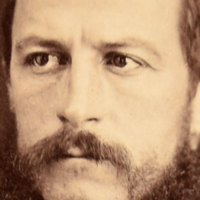
I am very interested in making contact with descendants of John Melvin Morgan (1875-1915):